HISTORY AND ESTABLISHMENT OF DAEC

The Diocese of Anglican Evangelical Churches (DAEC) was established in the year 2022. with a vision to unite churches that stand firm on Biblical authority, uphold the teachings of Gods Word, demonstrate brotherly love, embrace a missionary vision, and courageously advance the Kingdom of God.

First Consecration and Ordination – 6 November 2023

The first Episcopal Consecration and Priestly Ordination Service of DAEC was conducted on 6 November 2023. During this historic occasion, two Bishops were consecrated, and 8 Priests were ordained, marking a significant milestone in the establishment and development of the Diocese.

Second Priestly Ordination – 12 February 2026

The second Priestly Ordination Service was conducted on 12 February 2026 in Coimbatore. During this service, a total of 21 Priests were ordained from various districts across Tamil Nadu:

  1. Coimbatore District – 8 Priests
  2. Chengalpattu District – 1 Priest
  3. Tirunelveli District – 2 Priests
  4. Dindigul District – 6 Priests
  5. Pollachi District – 4 Priests

This service marked another important step in strengthening the Diocese and extending its ministry to different geographical regions.

Third Priestly Ordination – 21.10.2026

The third Priestly Ordination Service witnessed another significant milestone, with 17 Priests ordained from Coimbatore District. This further strengthened the clergy leadership and ministry foundation of DAEC.

Growth and Future Expansion

Through these three ordination services, DAEC has ordained a total of 46 Priests, in addition to the consecration of two Bishops during its first Episcopal Consecration Service.

DAEC is committed to strengthening its ecclesiastical structure, equipping and empowering clergy, nurturing local congregations, and extending its ministry to more districts and states across India. With a firm foundation in Biblical truth, a commitment to the Gospel of Jesus Christ, and a vision for the expansion of God’s Kingdom, DAEC looks forward to reaching new regions, establishing strong fellowships, and raising dedicated spiritual leaders for the advancement of His Church.

Motto

"Rooted in Truth. Formed in Christ. Sent to Serve."

VISION, MISSION & GOALS


OUR VISION

Bringing together Churches who stand firm on Biblical authority, witness to the Word,manifest brotherly love, embrace a missionary focus, and courageously establish his Kingdom.

OUR MISSION

To unite, equip, and strengthen churches through Biblical teaching, Gospel proclamation,Christian fellowship, missionary engagement, leadership development, and Kingdom-centredministry.

OUR GOALS

Our goal is to establish vibrant, multicultural Anglican churches that thrive through the powerand presence of the Holy Spirit.
We seek to transform churches through the TRUTH (Word of God) & Power of the HolySpirit.

Core Values of DAEC

Biblical Authority

2 Timothy 3:16–17

Christ-Centred Living

Colossians 1:18

Unity and Fellowship

Ephesians 4:3–6

Spirit-Empowered Ministry

2 Timothy 3:16–17

Servant Leadership

Mark 10:43–45

Holiness and Integrity

1 Peter 1:15–16

Evangelism and Mission

Matthew 28:19–20

Love and Compassion

John 13:34–35

Faithfulness and Accountability

1 Corinthians 4:2
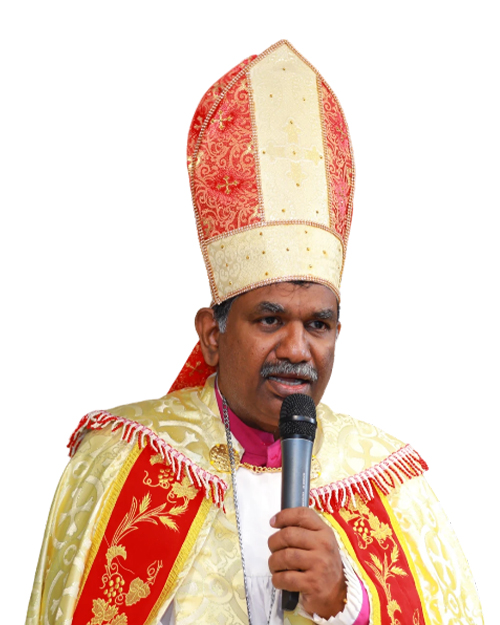
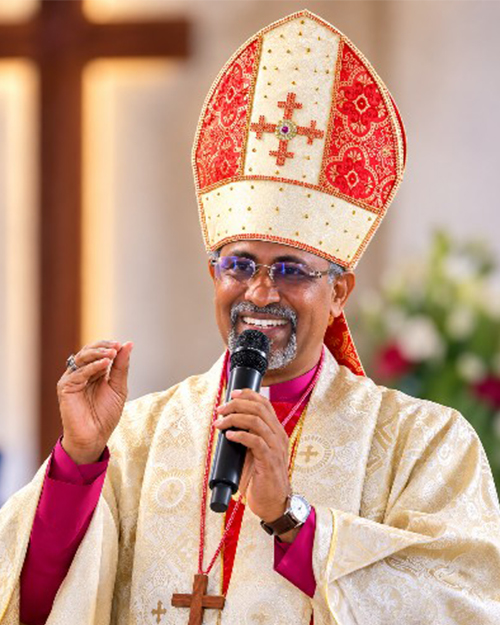
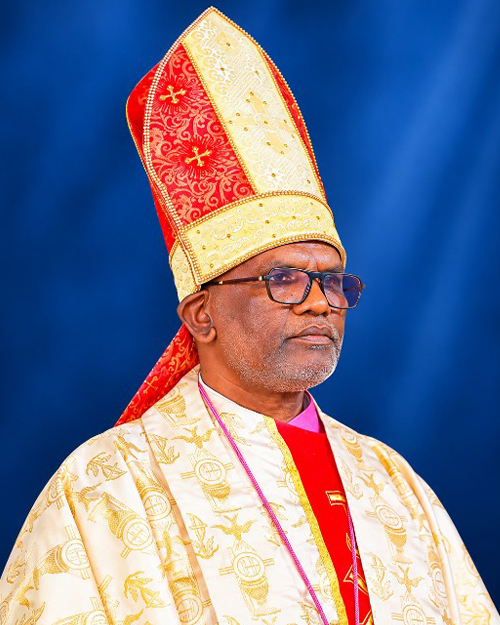
The Diocese is presently served by the following episcopal leadership

Rt. Rev. Dr. Lawrence Gunasekaran

Presiding Bishop

Rt. Rev. Dr. R. Samuel Raj

Co-Presiding Bishop

Rt. Rev. Dr. I. P. Bhaskaran

Bishop – Administration

STATEMENT OF FAITH

Our Declaration of Biblical Faith

The Diocese of Anglican Evangelical Churches (DAEC) believes that the Holy Bible is the inspired, authoritative, and infallible Word of God and the foundation of our faith, doctrine, and Christian life. We uphold the following fundamental doctrines as the basis of our faith, fellowship, worship, and ministry.

The Holy Scriptures

We believe that the Holy Bible, consisting of the Old and New Testaments, is divinely inspired by God and is the supreme authority for Christian faith, doctrine, conduct, and practice. It is the trustworthy Word of God and the foundation upon which the Church must build its teachings and ministry.

Biblical References: 2 Timothy 3:16–17; 2 Peter 1:20–21; Psalm 119:105; John 17:17.

The Triune God

We believe in one true and living God, eternally existing in three Persons: God the Father, God the Son, and God the Holy Spirit. These three Persons are equal in divinity, power, glory, and majesty, yet one God.

Biblical References: Matthew 28:19; 2 Corinthians 13:14; Deuteronomy 6:4; Matthew 3:16–17.

Jesus Christ – The Son of God

We believe that Jesus Christ is the eternal Son of God, fully divine and fully human. He was conceived by the Holy Spirit, born of the Virgin Mary, lived a sinless life, suffered and died on the Cross for the sins of humanity, was buried, rose bodily from the dead on the third day, ascended into heaven, and is seated at the right hand of the Father. We believe that salvation is found in Jesus Christ alone.

Biblical References: John 1:1–14; Luke 1:35; Philippians 2:5–11; 1 Corinthians 15:3–4; Acts 4:12.

Humanity, Sin, and Salvation

We believe that humanity was created in the image and likeness of God but that sin entered the world through disobedience, resulting in the separation of humanity from God. We believe that salvation is the gift of God's grace, received through repentance and faith in Jesus Christ, and not earned through human works. Through His precious blood, believers receive forgiveness of sins, justification, reconciliation with God, and the promise of eternal life.

Biblical References: Genesis 1:26–27; Romans 3:23–24; Ephesians 2:8–9; Romans 5:1; John 3:16.

The Holy Spirit

We believe in the Holy Spirit, the third Person of the Holy Trinity, who convicts the world of sin, regenerates believers, dwells within them, sanctifies their lives, empowers them for Christian service, and equips the Church with spiritual gifts for the building up of the Body of Christ. We believe that every Christian is called to live a Spirit-filled, holy, and fruitful life.

Biblical References: John 14:16–17; Acts 1:8; 1 Corinthians 12:4–11; Galatians 5:22–23; Ephesians 5:18.

The Church

We believe that the Church is the Body of Christ, consisting of all true believers in Jesus Christ. We affirm the importance of the local church as a community of worship, fellowship, prayer, biblical teaching, discipleship, and Christian service. We are committed to the unity of the Church, the faithful proclamation of the Gospel, and the spiritual growth of every congregation.

Biblical References: Ephesians 1:22–23; Ephesians 4:3–6; Acts 2:42–47; 1 Corinthians 12:12–27.

Baptism and Holy Communion

We believe that Baptism and Holy Communion are the two Sacraments ordained by our Lord Jesus Christ.
Holy Baptism: We believe that Baptism signifies incorporation into Christ and His Church, and is a visible sign of God's covenant and grace. Holy Communion (The Lord's Supper): We believe that Holy Communion is a sacred act of remembrance and proclamation of the death of Jesus Christ, through which believers participate in the spiritual nourishment and fellowship of Christ. We uphold the faithful administration of these Sacraments in accordance with Holy Scripture and Anglican tradition.

Biblical References: Matthew 28:19; Romans 6:3–4; Luke 22:19–20; 1 Corinthians 11:23–29.

Christian Life, Holiness, and Discipleship

We believe that every believer is called to live a life of holiness, obedience, love, integrity, humility, and service. We affirm that genuine faith produces good works and spiritual fruit through the transforming power of the Holy Spirit. We encourage every Christian to grow in prayer, worship, biblical knowledge, fellowship, and faithful discipleship.

Biblical References: Romans 12:1–2; 1 Peter 1:15–16; James 2:17; Galatians 5:22–23.

The Ministry and Leadership of the Church

We believe that God calls and equips individuals for various ministries within His Church, including Bishops, Priests, Pastors, Evangelists, Teachers, and other Ministry Leaders. We affirm the importance of servant leadership, biblical qualifications, spiritual maturity, accountability, and faithful stewardship in Christian ministry. We are committed to equipping ministers and believers for the work of ministry and the edification of the Body of Christ.

Biblical References: Ephesians 4:11–13; 1 Timothy 3:1–13; Titus 1:5–9; Mark 10:42–45; 1 Peter 5:2–4.

Evangelism, Mission, and Church Planting

We believe that the Church is entrusted with the Great Commission of our Lord Jesus Christ to preach the Gospel, make disciples of all nations, baptize believers, and teach them to obey His commandments. We are committed to evangelism, missionary outreach, church planting, community transformation, and compassionate service to society.

Biblical References: Matthew 28:18–20; Mark 16:15; Acts 1:8; Romans 10:14–15.

The Second Coming of Christ

We believe in the personal, glorious, and visible return of our Lord Jesus Christ. We look forward to His coming, the resurrection of the dead, the final judgment, and the fulfilment of God's eternal purposes. We encourage all believers to live faithfully, watchfully, and expectantly as they await His return.

Biblical References: Acts 1:11; Matthew 24:30–31; 1 Thessalonians 4:16–17; Revelation 22:12.

The Resurrection and Eternal Life

We believe in the bodily resurrection of the dead, the final judgment of all humanity, eternal life for those who belong to Christ, and eternal separation from God for those who reject Him. We believe that God will establish the new heaven and new earth, where righteousness dwells and His people will live with Him forever.

Biblical References: John 5:28–29; 1 Corinthians 15:51–57; Revelation 20:11–15; Revelation 21:1–4.

OBJECTIVES OF THE DIOCESE

The Diocese of Anglican Evangelical Churches (DAEC) seeks to glorify God by strengthening evangelical churches through biblical teaching, spiritual formation, leadership development, church unity, evangelism, discipleship, pastoral support, and compassionate community service. Guided by the authority of Holy Scripture, enriched by the Anglican evangelical heritage, and empowered by the Holy Spirit, the Diocese is committed to equipping God’s people, building healthy churches, raising faithful leaders, and advancing the Gospel of Jesus Christ.

GEOGRAPHICAL JURISDICTION

The Diocese of Anglican Evangelical Churches (DAEC) shall exercise its ecclesiastical, spiritual, pastoral, and administrative jurisdiction within India and Internationally, in accordance with its Constitution, Statement of Faith, and established ecclesiastical governance.

The geographical jurisdiction of DAEC is intended to provide opportunities for evangelical churches, clergy, pastors, and Christian ministries to unite under a common biblical vision and Anglican evangelical identity.

Jurisdiction within India

DAEC shall have its primary geographical jurisdiction throughout the Republic of India.

Its ministry and ecclesiastical administration may extend to:

  1. South India: Tamil Nadu, Kerala, Karnataka, Andhra Pradesh, Telangana, and Puducherry.
  2. North India: Delhi, Uttar Pradesh, Punjab, Haryana, Himachal Pradesh, Uttarakhand, Jammu and Kashmir, and Ladakh.
  3. East India: West Bengal, Odisha, Bihar, Jharkhand, Assam, and other North-Eastern states.
  4. West India: Maharashtra, Gujarat, Goa, Rajasthan, and neighbouring regions.
  5. Central India: Madhya Pradesh and Chhattisgarh.
  6. Other territories: Any other state or Union Territory of India where DAEC establishes congregations, diocesan districts, regional fellowships, or affiliated ministries.

INTERNATIONAL JURISDICTION

DAEC may extend its ecclesiastical fellowship and ministry beyond India through International Clergy Ordinations, International churches, congregations, missions, and affiliated Christian ministries.

CANONS DAEC

The Canons shall provide detailed rules and regulations for implementing the Constitution and maintaining proper ecclesiastical order throughout the Diocese.

Canon 1 -
Ecclesiastical Authority
  • All churches and clergy affiliated with DAEC shall respect the established diocesan authority.
  • Ecclesiastical decisions shall be made according to the Constitution and Canons.
  • No individual office bearer shall exercise authority beyond the powers assigned to the office.
Canon 2 –
Admission and Recognition of Churches
  • Every church seeking affiliation shall submit an official application.
  • The church shall accept the Statement of Faith and diocesan regulations.
  • Recognition shall be granted following appropriate examination and approval.
  • The Diocese may conduct periodic reviews of affiliated churches.
Canon 3 –
Licensing and Ordination
  • All candidates shall undergo theological and ministerial assessment.
  • Ordination shall be conducted only with the approval of the authorized ecclesiastical authority.
  • Separate requirements shall be established for Deacons, Priests, and Bishops.
  • Ordination certificates and ministerial records shall be maintained by the Diocese.
  • Overseas ordinations shall follow the same doctrinal and ministerial standards, subject to local legal requirements.
Canon 4 -
Clergy Conduct and Ethics
  • Every minister shall maintain biblical standards of personal and professional conduct.
  • Clergy shall not misuse their office for personal financial or political advantage.
  • Ministers shall demonstrate integrity, humility, accountability, and responsible leadership.
  • Safeguarding policies shall protect children, vulnerable adults, and members of congregations.
Canon 5 –
Worship and Sacramental Ministry
  • Worship shall be conducted in accordance with biblical principles and DAEC’s Anglican evangelical identity.
  • Baptism and Holy Communion shall be administered by duly authorized ministers.
  • The Diocese shall establish guidelines for liturgy, worship, and sacramental practices.
Canon 6 –
Pastoral Supervision
  • Every affiliated congregation shall have an approved pastoral leadership structure.
  • Pastors shall submit ministry reports as prescribed.
  • The Diocese shall provide pastoral guidance, training, mentoring, and ministerial support.
  • Regular clergy fellowship meetings shall be encouraged.
Canon 7 -
Diocesan Elections and Appointments
  • Eligibility requirements shall be established for each diocesan office.
  • Elections and appointments shall follow transparent procedures.
  • Office bearers shall discharge their responsibilities faithfully.
  • Vacancies shall be filled according to the prescribed procedures.
Canon 8 –
Financial Accountability
  • Every diocesan department shall maintain proper financial records.
  • Approved budgets shall guide expenditure.
  • No diocesan funds shall be used for unauthorized personal purposes.
  • Financial statements shall be presented to the competent governing authority.
Canon 9 –
Church Property and Administration
  • Church properties shall be managed responsibly.
  • Property transactions shall require appropriate authorization.
  • Legal ownership and registration shall be maintained in the name of the appropriate legal entity.
  • Disputes concerning church property shall be addressed through established legal and ecclesiastical procedures.
Canon 10 -
Ministerial Training and Development
  • Clergy shall participate in continuing theological education.
  • The Diocese shall organize annual ministerial conferences and training programmes.
  • Leadership development, communication skills, counselling, and pastoral administration shall be encouraged.
  • Newly ordained ministers shall receive appropriate mentoring.
Canon 11 –
International Ministry and Overseas Administration
  • DAEC may establish international regional fellowships and overseas diocesan structures.
  • Overseas representatives shall be appointed through approved procedures.
  • International congregations shall adhere to the fundamental Statement of Faith.
  • All overseas operations shall comply with local laws.
  • International partnerships shall be governed by written agreements where appropriate.
Canon 12 –
Appeals and Ecclesiastical Disputes
  • Disputes shall first be addressed through biblical reconciliation.
  • Unresolved matters may be referred to the Diocesan Council or an appointed ecclesiastical tribunal.
  • Appeals shall be handled through an established and impartial process.
  • Final ecclesiastical decisions shall follow the Constitution and Canons, without overriding civil legal rights.
Canon 13 -
Interpretation of the Constitution and Canons
  • The Diocesan Council shall administer and interpret the Constitution and Canons within its delegated authority.
  • Any ambiguity shall be resolved consistently with the Statement of Faith and the Constitution.
  • Major constitutional interpretations may be referred to the Diocesan Assembly.
Canon 14 –
Review and Amendment of Canons
  • The Canons may be reviewed periodically.
  • Amendments shall require approval by the competent diocesan authority.
  • No Canon shall contradict the Constitution or Statement of Faith.